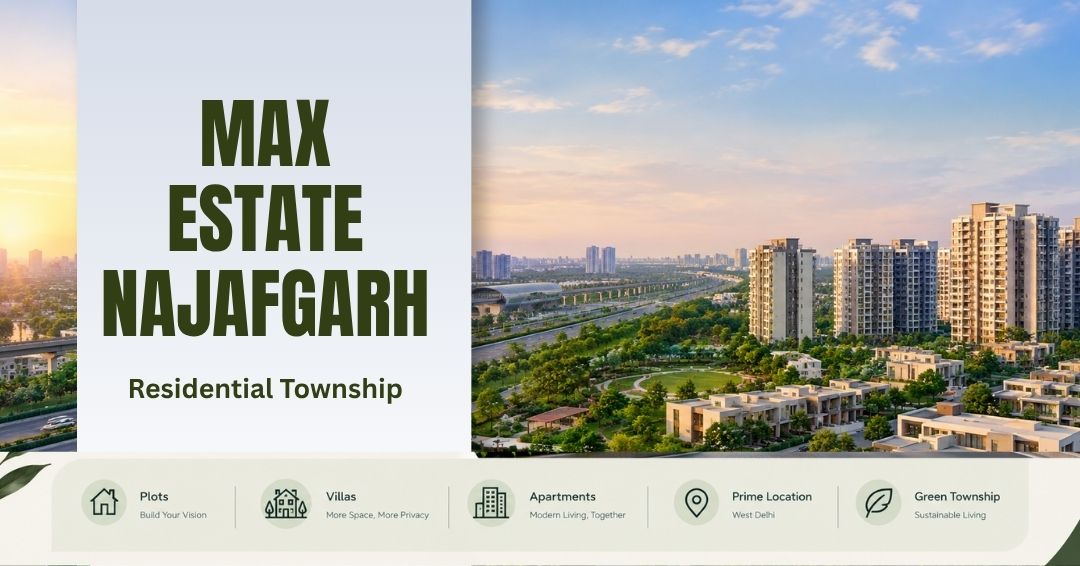
A township is more than a mere aggregation of houses, but rather a system that includes houses, spaces, connections, community facilities and necessary services under one plan. Thus, it is possible for a big residential estate to be made to operate as a community.
In West Delhi, a sizable residential complex called Max Estate Najafgarh is being constructed. Max Estates' residential development pipeline in Delhi NCR includes the Najafgarh potential and the company's overarching development philosophy emphasises community-oriented places, sustainability and well-being.
Understanding the township concept therefore requires looking beyond individual homes and considering how different elements may work together.
What Does the Township Concept Mean?
In a conventional residential project, the primary focus is often on individual apartments or buildings. A township takes a wider approach.
The planning typically considers:
Residential areas
Internal roads and movement
Landscaped and open spaces
Community facilities
Recreation and wellness areas
Parking and supporting infrastructure
Environmental features
Security and access management
For a large development such as Max Estate Najafgarh township, this broader planning approach can influence how residents experience their surroundings on a daily basis.
A Residential Concept Built Around Choice
One of the key aspects associated with the proposed development is the availability of different residential formats. The project information describes plots, villas and apartments as part of the planned residential offering.
This creates different ways of approaching home ownership.
Plots for Greater Customisation
Max Estate Najafgarh plots can be relevant for buyers who want more flexibility in designing a future home. A plotted format allows the home to be planned according to individual requirements, subject to applicable development regulations.
Before purchasing a plot, buyers should examine:
Plot dimensions and location
Permitted construction
Internal road access
Utility provisions
Title and approval documents
Development and possession timelines
The actual plot specifications should be verified from the latest official documentation.
Villas for Independent-Home Living
The proposed Max Estate Najafgarh villas represent another residential format within the township concept.
A villa-based format can offer an independent-home environment while remaining connected to shared community infrastructure. For families, factors such as usable space, parking, outdoor areas, privacy and access to common facilities can be important when evaluating this format.
Apartments for Community Living
Max Estate Najafgarh apartments are aimed at a different residential preference. Apartment living generally combines private residential space with shared facilities and managed common areas.
Potential buyers should look beyond the number of bedrooms and compare carpet area, layout efficiency, floor position, natural light, ventilation, parking and maintenance arrangements.
Green Planning as a Township Element
Green spaces can have a functional role in large residential communities. They can provide areas for walking, recreation and informal interaction while also breaking up built-up sections of the development.
Max Estates' broader philosophy places emphasis on environmental harmony, including attention to air, water and biophilic elements.
The proposed Max Estate Najafgarh lifestyle can therefore be understood through several planning elements:
Landscaped outdoor areas
Green corridors
Pedestrian-friendly spaces
Parks and recreational zones
Environmental management systems
Community areas
The exact size, location and implementation of these elements should be confirmed from approved plans when available.
Wellness as Part of Residential Planning
Modern township planning increasingly considers how residents use spaces outside their homes. Fitness, recreation and social interaction can become part of the residential environment.
The proposed project information includes lifestyle facilities such as recreational areas, fitness spaces, children's play areas and community facilities.
This aligns with Max Estates' stated LiveWell philosophy, which considers physical, emotional, social and environmental aspects of well-being in its developments.
For buyers, the useful question is not simply whether an amenity is listed. It is how that facility is positioned, how accessible it is from different residential zones and how it fits into the overall master plan.
Connectivity Within the Township
Internal connectivity is another important part of a township concept. Roads, pedestrian routes, parking areas and entry points need to work together so that movement remains practical for residents and visitors.
A well-planned layout can help separate different types of movement while maintaining convenient access to community facilities.
For Max Estate Najafgarh, buyers should eventually review the approved master plan to understand:
Main and secondary entry points
Internal road hierarchy
Pedestrian movement
Parking locations
Emergency access
Service movement
Placement of community facilities
These details can provide a more useful picture of the proposed neighbourhood than a brochure image alone.
Sustainability and Resource Management
Sustainability is another concept associated with Max Estates' development philosophy. The company states that energy and resource efficiency form a core part of its sustainable development policy.
At the project level, buyers should look for specific, documented measures rather than relying on broad sustainability terminology.
Important areas to check include:
Water conservation systems
Wastewater treatment
Rainwater management
Energy-efficient lighting
Renewable energy provisions
Landscape irrigation
Waste management
The final specifications should be checked against approved plans and project documents.
Why the Township Concept Matters to Buyers
The value of a township concept is not limited to the number of amenities. The relationship between different elements is equally important.
For example, a clubhouse may be useful when it is easily accessible, while green areas can have greater everyday value when connected to walking routes and residential zones.
When researching Max Najafgarh residential project, buyers can assess the development through these practical questions:
How are residential zones arranged?
Where are the major open spaces located?
How will residents move within the community?
Which facilities are planned for different age groups?
What sustainability systems are documented?
What infrastructure will be delivered in each development phase?
Project Information and Due Diligence
Since project information can evolve during the planning and development process, buyers should verify the latest documents before making financial decisions. Max Estates' official disclaimer specifically states that information is provided for guidance and that designs and specifications may change without prior notice.
Important documents to review include:
Current RERA registration, where applicable
Approved layout and master plans
Land and title documentation
Unit or plot specifications
Development schedule
Payment terms
Possession commitments
Maintenance arrangements
This approach helps separate the planned township concept from features that have actually received final approval or reached implementation.
FAQs
1. What is the main concept behind the township?
The concept focuses on integrating residential spaces with open areas, community facilities, movement networks and supporting infrastructure within one planned development.
2. What residential formats are associated with the project?
The proposed residential formats include plots, villas and apartments. Buyers can evaluate each format based on their preferred level of customisation, space requirements and maintenance preferences.
3. How does sustainability fit into the township concept?
Sustainability is part of Max Estates' broader development philosophy, which highlights environmental responsibility and resource efficiency. Project-specific systems should be confirmed through official documentation.
Conclusion
Max Estate Najafgarh can be comprehended not just by its individual residential styles but also by the broader concept of township development. A more comprehensive framework for residential life is created by the suggested integration of residences, public areas, community facilities, internal infrastructure, and sustainability considerations.
Studying the official designs and project papers when they become available should be the next step for anyone researching Max Estate Najafgarh township. This makes it easier to see how the suggested idea will work in a real domestic setting.